What Makes an Exterior Door Energy Efficient?
What Makes an Exterior Door Energy Efficient?
What Makes an Exterior Door Energy Efficient?
An energy-efficient exterior door combines appropriate materials and construction with insulating features, properly selected glass, effective weatherstripping, and professional installation. The door's energy-performance ratings can also help homeowners compare products. Even a well-designed door may perform poorly if it doesn't fit the opening correctly or isn't properly installed and sealed.
Energy Efficiency Is About More Than the Door Material
When homeowners shop for an energy-efficient exterior door, the conversation often starts with material.
But the material is only one piece of the system.
The door, frame, glass, weatherstripping, threshold, fit, and installation can all affect overall performance.
That's why comparing exterior doors based on one feature doesn't tell you the whole story.
Look at the Door's Construction
Different exterior door products use different materials and construction methods.
Rather than assuming one material is always best, look at the specifications of the particular door you're considering.
Ask how the door is constructed and what features are designed to reduce unwanted heat transfer.
Glass Can Affect Performance
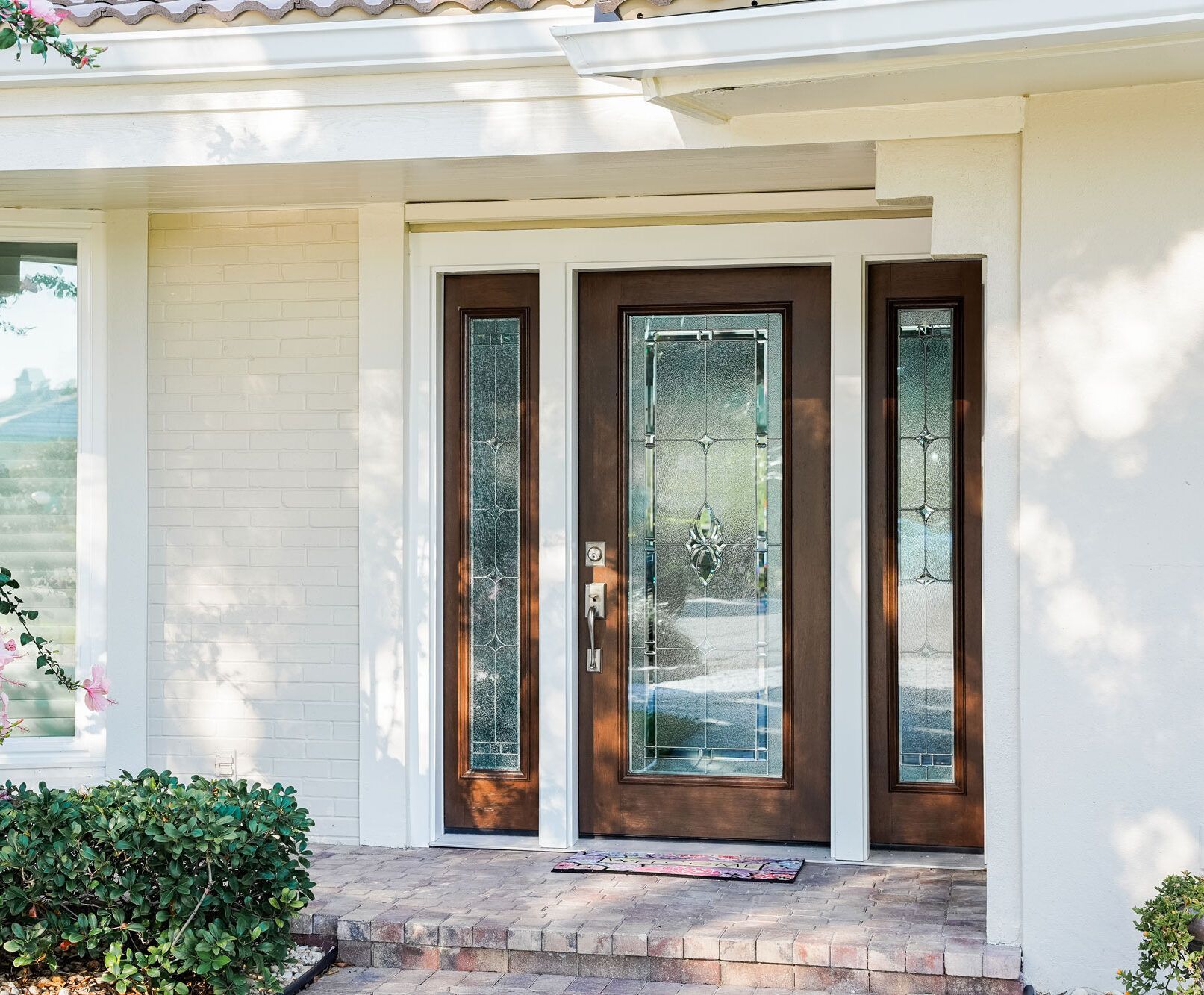
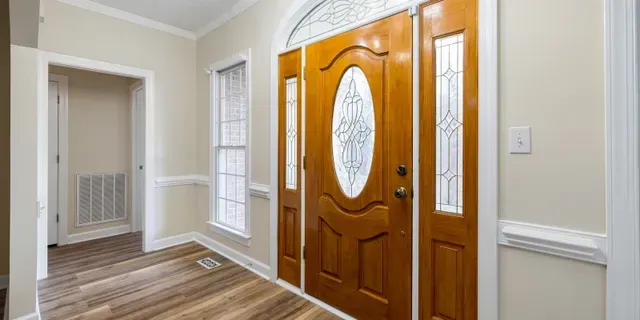
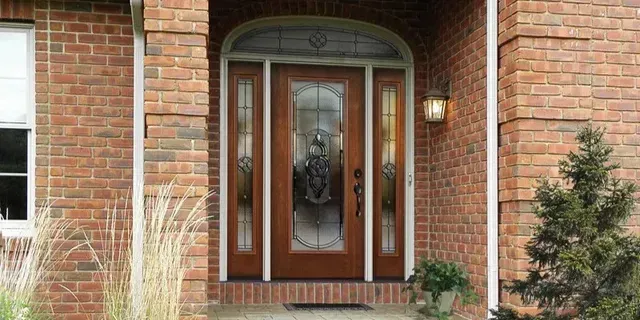
Glass can make an exterior door beautiful and bring natural light into an entryway.
It can also influence energy performance.
The size and type of glass, number of panes, coatings, spacers, and other components can vary by product and configuration.
If you want decorative glass, ask about the performance characteristics of the actual glass package you're considering.
Weatherstripping and Sealing Matter
A door can have impressive product specifications and still disappoint if air can easily move around it.
Weatherstripping helps create a seal when the door is closed.
The threshold and other components of the door system also play a role in limiting unwanted air movement.
These details aren't as exciting as choosing a beautiful finish or decorative glass—but you'll probably appreciate them on a cold winter morning.
Understand Energy-Performance Ratings
Depending on the product, homeowners may see ratings such as U-factor and Solar Heat Gain Coefficient.
These measurements can help compare how particular products perform.
Rather than chasing one number, ask the door professional to explain what the ratings mean and which features are relevant to your home and door location.
Installation Can Affect Real-World Performance
The door needs to fit the opening properly.
Professional measurement and installation help ensure that the door operates correctly and that the complete system is properly fitted and sealed.
A quality product cannot compensate for every installation problem.
Should You Replace a Door Just for Energy Efficiency?
Not necessarily.
If your current exterior door is in good condition, operates correctly, seals well, and meets your needs, replacement may not be necessary simply because a newer product is available.
However, if you're already dealing with drafts, deterioration, operating problems, or planning to replace the door for other reasons, energy performance is worth considering as you compare your options.
Compare the Complete Door System
The Window Guyz offers professionally installed exterior doors, including ProVia products, and can help homeowners compare construction, glass, appearance, performance features, and installation.
The goal isn't simply to find a door labeled “energy efficient.”
It's to find the right exterior door system for your home.
More Blog Posts